| dc.contributor.advisor | Kagal, Lalana | |
| dc.contributor.author | Hadjiivanov, Michael D. | |
| dc.date.accessioned | 2025-09-18T14:30:11Z | |
| dc.date.available | 2025-09-18T14:30:11Z | |
| dc.date.issued | 2025-05 | |
| dc.date.submitted | 2025-06-23T14:02:05.402Z | |
| dc.identifier.uri | https://hdl.handle.net/1721.1/162743 | |
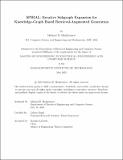
| dc.description.abstract | Large language models (LLMs) excel at generating fluent answers but are prone to hallucination when the prompt fails to anchor them to verifiable facts. Retrieval-augmented generation (RAG) mitigates this risk, yet existing graph-based retrievers either return bloated neighborhoods or incur prohibitive latency on large knowledge graphs (KGs). We introduce SPIRAL—Supervised Prior + Iterative Reinforcement with Adaptive Labelling—a lightweight two-stage framework that constructs compact, tree-shaped evidence subgraphs. This differs from previous work in its use of a trained, iterative policy network built on top of a prior over triples, delivering improved performance on multi-hop question answering tasks. Stage 1 trains a single-label GLASS-GNN on shortest-path heuristics, producing frozen, question-aware node embeddings at negligible runtime cost with significant local topology awareness around question entities. Stage 2 layers a GLASS policy—which re-labels the partial subgraph at each step—on top of these embeddings and optimizes it with proximal policy optimization. The policy scores only the 1-hop frontier, enabling sub-second inference even on million-edge graphs. On the multi-hop KGQA benchmark WebQSP, SPIRAL attains 0.95 triple recall and 0.97 answer recall while retrieving at most 50 triples—doubling the sampling efficiency of the strongest prior work. Coupled with Llama 3.1-8B, the retrieved trees boost Hit@1 by 2.5 % over SubgraphRAG. Ablation studies confirm that adaptive labels are critical for multi-hop reasoning. SPIRAL demonstrates that accurate and concise retrieval is achievable without resorting to massive models or expensive graph crawls, opening the door to real-time, KG-grounded assistants on modest hardware. | |
| dc.publisher | Massachusetts Institute of Technology | |
| dc.rights | In Copyright - Educational Use Permitted | |
| dc.rights | Copyright retained by author(s) | |
| dc.rights.uri | https://rightsstatements.org/page/InC-EDU/1.0/ | |
| dc.title | SPIRAL: Iterative Subgraph Expansion for Knowledge-Graph Based Retrieval-Augmented Generation | |
| dc.type | Thesis | |
| dc.description.degree | M.Eng. | |
| dc.contributor.department | Massachusetts Institute of Technology. Department of Electrical Engineering and Computer Science | |
| mit.thesis.degree | Master | |
| thesis.degree.name | Master of Engineering in Electrical Engineering and Computer Science | |