| dc.contributor.advisor | S.P. Kothari. | en_US |
| dc.contributor.author | Li, Xu, 1974- | en_US |
| dc.contributor.other | Sloan School of Management. | en_US |
| dc.date.accessioned | 2005-06-02T18:42:52Z | |
| dc.date.available | 2005-06-02T18:42:52Z | |
| dc.date.copyright | 2004 | en_US |
| dc.date.issued | 2004 | en_US |
| dc.identifier.uri | http://hdl.handle.net/1721.1/17798 | |
| dc.description | Thesis (Ph. D.)--Massachusetts Institute of Technology, Sloan School of Management, 2004. | en_US |
| dc.description | Includes bibliographical references. | en_US |
| dc.description.abstract | This thesis contains two chapters. Chapter One provides definitive evidence about the effect of discretionary current accruals on the pricing of IPOs. Specifically, I seek to discriminate between two alternative explanations for the prior findings: 1) behavioral biases coupled with limited arbitrage; and 2) the sample- and period-specific nature of the results in the prior literature. Using hand-gathered accrual data for all IPOs from 1926 to 1961 and machine-readable accrual data for all IPOs from 1962 to 1998, I obtain the following results. First, I fail to observe a negative association between discretionary current accruals and subsequent price performance for the 1926 to 1971 period. Second, my analysis reveals that the pattern of cross-sectional evidence is inconsistent with the predictions made by behavioral theories. Third, in the 1972 to 1998 period, evidence of predictable negative performance attributable to IPO discretionary current accruals is limited to NASDAQ firms. Overall, these findings are difficult to reconcile with mispricing as an outcome of investor behavioral biases correlated across individuals. Chapter Two examines how financial statement informativeness, analyst following, and company news relate to the information asymmetry between insiders and outsiders. Corporations' timely disclosures of value relevant information and information collection by outsiders reduce information asymmetry, limiting insiders' ability to trade profitably on private information. We use the profitability and intensity of insider trades to proxy for information asymmetry. We find that increased analyst following is associated with reduced profitability of insider trades and reduced insider purchases. Financial statement | en_US |
| dc.description.abstract | (cont.) informativeness is negatively associated with the frequency of insider purchases. However, company news, good or bad, is positively associated with insider purchase frequency. | en_US |
| dc.description.statementofresponsibility | by Xu Li. | en_US |
| dc.format.extent | 108 leaves | en_US |
| dc.format.extent | 5783791 bytes | |
| dc.format.extent | 5794684 bytes | |
| dc.format.mimetype | application/pdf | |
| dc.format.mimetype | application/pdf | |
| dc.language.iso | eng | en_US |
| dc.publisher | Massachusetts Institute of Technology | en_US |
| dc.rights | M.I.T. theses are protected by copyright. They may be viewed from this source for any purpose, but reproduction or distribution in any format is prohibited without written permission. See provided URL for inquiries about permission. | en_US |
| dc.rights.uri | http://dspace.mit.edu/handle/1721.1/7582 | |
| dc.subject | Sloan School of Management. | en_US |
| dc.subject.lcsh | Going public (Securities) | en_US |
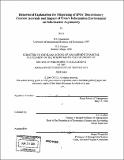
| dc.title | Behavioral explanation for mispricing of IPO's discretionary current accruals and impact of firm's information environment of information asymmetry | en_US |
| dc.type | Thesis | en_US |
| dc.description.degree | Ph.D. | en_US |
| dc.contributor.department | Sloan School of Management | |
| dc.identifier.oclc | 56550930 | en_US |