| dc.contributor.advisor | David Geltner. | en_US |
| dc.contributor.author | Elonen, Kristian (Kristan Sami Juhani) | en_US |
| dc.contributor.other | Massachusetts Institute of Technology. Center for Real Estate. Program in Real Estate Development. | en_US |
| dc.coverage.spatial | e------ | en_US |
| dc.date.accessioned | 2014-01-23T17:12:06Z | |
| dc.date.available | 2014-01-23T17:12:06Z | |
| dc.date.issued | 2013 | en_US |
| dc.identifier.uri | http://hdl.handle.net/1721.1/84176 | |
| dc.description | Thesis (S.M. in Real Estate Development)--Massachusetts Institute of Technology, Program in Real Estate Development in Conjunction with the Center for Real Estate, 2013. | en_US |
| dc.description | This electronic version was submitted by the student author. The certified thesis is available in the Institute Archives and Special Collections. | en_US |
| dc.description | Cataloged from student-submitted PDF version of thesis. | en_US |
| dc.description | Includes bibliographical references (page 44). | en_US |
| dc.description.abstract | The idea of a pure-play property portfolio is simply to replicate the returns of a specified target real estate sector without any exposure to other sectors by taking an optimal mix of long and short positions in listed real estate securities, combined with bonds to de-lever the traded equity shares. The goal of this study was to explore the possibility of applying the pure portfolio methodology in Europe, similarly to the way it has been recently launched in the United States, by constructing various demonstration sets of country and sector indices for the major European real estate markets. We used data for the three-year period 2010-2012. We find that the pure-play methodology yields reasonable results for the European-wide office, retail, residential, industrial and multi-use indices. The all-sector country indices for the UK, France, Germany, Italy and Sweden seem to relatively accurately reflect the underlying economic trends in each country, while the Dutch index produced exaggerated negative results during the sample period. The performance of the computed Eurozone and Other-Europe indices are in line with reasonable expectations, among other things mirroring the events in the single currency area during 2011. A number of country-specific sector indices were also constructed. For the UK, office, retail, residential, industrial and multi-use indices were estimated. For France, office, retail and multi-use indices were computed. For Germany and Sweden office and residential sector indices were calculated. While the results for the majority of the country-specific sector indices seem reasonable and reliable, some of them suffer from high volatility or negative autocorrelation. In summary, this study suggests that the currently available data on European REITs and other real estate investment companies may well enable the construction of a number of sector, country, as well as country-specific sector indices for the key European real estate markets. | en_US |
| dc.description.statementofresponsibility | by Kristian Elonen. | en_US |
| dc.format.extent | 44 pages | en_US |
| dc.language.iso | eng | en_US |
| dc.publisher | Massachusetts Institute of Technology | en_US |
| dc.rights | M.I.T. theses are protected by
copyright. They may be viewed from this source for any purpose, but
reproduction or distribution in any format is prohibited without written
permission. See provided URL for inquiries about permission. | en_US |
| dc.rights.uri | http://dspace.mit.edu/handle/1721.1/7582 | en_US |
| dc.subject | Center for Real Estate. Program in Real Estate Development. | en_US |
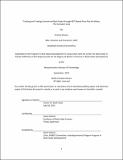
| dc.title | Tracking and trading commercial real estate through REIT-based pure-play portfolios : The European Case | en_US |
| dc.type | Thesis | en_US |
| dc.description.degree | S.M.in Real Estate Development | en_US |
| dc.contributor.department | Massachusetts Institute of Technology. Center for Real Estate. Program in Real Estate Development. | en_US |
| dc.contributor.department | Massachusetts Institute of Technology. Center for Real Estate | |
| dc.identifier.oclc | 867638694 | en_US |