

Modeling study of the anti-knock tendency of substituted phenols as additives: an application of the reaction mechanism generator (RMG)
Downloadc7cp07058f.pdf (4.369Mb)
PUBLISHER_CC
Publisher with Creative Commons License
Creative Commons Attribution
Terms of use
Metadata
Show full item recordAbstract
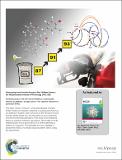
This work presents kinetic modeling efforts to evaluate the anti-knock tendency of several substituted phenols if used as gasoline additives. They are p-cresol, m-cresol, o-cresol, 2,4-xylenol, 2-ethylphenol, and guaiacol. A detailed kinetic model was constructed to predict the ignition of blends of the phenols in n-butane with the help of reaction mechanism generator (RMG), an open-source software package. The resulting model, which has 1465 species and 27428 reactions, was validated against literature n-butane ignition data in the low-to-intermediate temperature range. To rank the anti-knock tendency of the additives, engine-like simulations were performed in a closed adiabatic homogenous batch reactor with a volume history derived from the pressure profile of a real research octane number (RON) engine test. The ignition timings of the additive blends were compared to that of primary reference fuels (PRFs) to quantitatively predict the anti-knock ability. The model predictions agree well with experimental determinations of the changes in RON induced by the additives. This study explains the chemical mechanism by which methyl-substituted phenols increase RON, and demonstrates how fundamental chemical kinetics can be used to evaluate practical fuel additive performance.
Date issued
2018-01Department
Massachusetts Institute of Technology. Department of Chemical EngineeringJournal
Physical Chemistry Chemical Physics
Publisher
Royal Society of Chemistry (RSC)
Citation
Zhang, Peng et al. “Modeling Study of the Anti-Knock Tendency of Substituted Phenols as Additives: An Application of the Reaction Mechanism Generator (RMG).” Physical Chemistry Chemical Physics 20, 16 (2018): 10637–10649 © 2018 Royal Society of Chemistry
Version: Final published version
ISSN
1463-9076
1463-9084