

Vertically aligned carbon nanotubes: production and applications for environmental sustainability
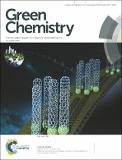
Downloadc8gc02195c.pdf (4.585Mb)
PUBLISHER_CC
Publisher with Creative Commons License
Creative Commons Attribution
Terms of use
Metadata
Show full item recordAbstract
Carbon nanomaterials play an essential role in resolving the increasingly urgent energy and environmental crises. A unique type of carbon nanotubes (CNTs), vertically aligned CNTs (VACNTs) possess the intrinsic, extraordinary nanoscale properties (mechanical, electrical, and thermal) of individual CNTs, but present them in a hierarchical and anisotropic morphology, which holds promise to transform a diverse set of practical environmental application processes from water filtration to energy storage. Nevertheless, the potential environmental impacts beholden to their synthetic methodology might reduce the net sustainability benefits of this advanced material, where environmental impacts of the synthesis may be reduced or offset by the lifetime benefits of the proposed technologies. Aiming to provide a holistic view of the robust development of VACNT-enabled environmental technologies, this critical review assesses recent advances in their production routes and applications, both with a focus on environmental objective optimization. In particular, sustainable production of VACNTs, VACNT-based functional composite materials, and their environmental engineering applications based on different functional mechanisms (i.e., sorption, catalysis, and separation) are thoroughly featured. Finally, we illustrate VACNTs as an example to explore strategies to co-optimize their environmental benefits and costs, which could potentially impact the way all other emerging materials are designed for environmental sustainability purposes.
Date issued
2018-10Department
Massachusetts Institute of Technology. Department of Civil and Environmental EngineeringJournal
Green Chemistry
Publisher
Royal Society of Chemistry
Citation
Shi, Wenbo, and Desiree L. Plata. “Vertically Aligned Carbon Nanotubes: Production and Applications for Environmental Sustainability.” Green Chemistry 20, 23 (2018): 5245–5260 © 2018 The Royal Society of Chemistry
Version: Final published version
ISSN
1463-9262
1463-9270