| dc.contributor.author | Gural, Nil | |
| dc.contributor.author | Mancio Silva, Liliana | |
| dc.contributor.author | Miller, Alex B | |
| dc.contributor.author | Galstian, Ani | |
| dc.contributor.author | Butty, Vincent L | |
| dc.contributor.author | Levine, Stuart S | |
| dc.contributor.author | Patrapuvich, Rapatbhorn | |
| dc.contributor.author | Desai, Salil P | |
| dc.contributor.author | Mikolajczak, Sebastian A | |
| dc.contributor.author | Kappe, Stefan H. I. | |
| dc.contributor.author | Fleming, Heather | |
| dc.contributor.author | March-Riera, Sandra | |
| dc.contributor.author | Sattabongkot, Jetsumon | |
| dc.contributor.author | Bhatia, Sangeeta N | |
| dc.date.accessioned | 2019-05-29T19:47:40Z | |
| dc.date.available | 2019-05-29T19:47:40Z | |
| dc.date.issued | 2018-02 | |
| dc.date.submitted | 2017-11 | |
| dc.identifier.issn | 1931-3128 | |
| dc.identifier.uri | https://hdl.handle.net/1721.1/121178 | |
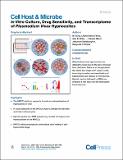
| dc.description.abstract | The unique relapsing nature of Plasmodium vivax infection is a major barrier to malaria eradication. Upon infection, dormant liver-stage forms, hypnozoites, linger for weeks to months and then relapse to cause recurrent blood-stage infection. Very little is known about hypnozoite biology; definitive biomarkers are lacking and in vitro platforms that support phenotypic studies are needed. Here, we recapitulate the entire liver stage of P. vivax in vitro, using a multiwell format that incorporates micropatterned primary human hepatocyte co-cultures (MPCCs). MPCCs feature key aspects of P. vivax biology, including establishment of persistent small forms and growing schizonts, merosome release, and subsequent infection of reticulocytes. We find that the small forms exhibit previously described hallmarks of hypnozoites, and we pilot MPCCs as a tool for testing candidate anti-hypnozoite drugs. Finally, we employ a hybrid capture strategy and RNA sequencing to describe the hypnozoite transcriptome and gain insight into its biology. Plasmodium vivax hypnozoites are difficult to study due to the lack of human liver platforms. Gural et al. recapitulated the entire liver stage of P. vivax in vitro, including formation and reactivation of hypnozoites and release of merosomes. Hybrid capture followed by RNA-seq revealed a first look into the hypnozoite transcriptome. Keywords: malaria; plasmodium vivax; liver stage; hypnozoite; RNA-seq; transcriptome; RNA capture; micropatterning; primary human hepatocytes; radical cure | en_US |
| dc.description.sponsorship | Bill & Melinda Gates Foundation (Grant OPP1023607) | en_US |
| dc.description.sponsorship | National Cancer Institute (U.S.) (Grant P30-CA14051) | en_US |
| dc.language.iso | en | |
| dc.publisher | Elsevier BV | en_US |
| dc.relation.isversionof | 10.1016/J.CHOM.2018.01.002 | en_US |
| dc.rights | Creative Commons Attribution-NonCommercial-NoDerivs License | en_US |
| dc.rights.uri | http://creativecommons.org/licenses/by-nc-nd/4.0/ | en_US |
| dc.source | Elsevier | en_US |
| dc.title | In Vitro Culture, Drug Sensitivity, and Transcriptome of Plasmodium Vivax Hypnozoites | en_US |
| dc.type | Article | en_US |
| dc.identifier.citation | Gural, Nil et al. "In Vitro Culture, Drug Sensitivity, and Transcriptome of Plasmodium Vivax Hypnozoites." Cell Host & Microbe 23, 3 (February 2018): 395-406 © 2018 Elsevier | en_US |
| dc.contributor.department | Massachusetts Institute of Technology. Institute for Medical Engineering & Science | en_US |
| dc.contributor.department | Koch Institute for Integrative Cancer Research at MIT | en_US |
| dc.relation.journal | Cell Host & Microbe | en_US |
| dc.eprint.version | Final published version | en_US |
| dc.type.uri | http://purl.org/eprint/type/JournalArticle | en_US |
| eprint.status | http://purl.org/eprint/status/PeerReviewed | en_US |
| dc.date.updated | 2019-05-09T17:32:31Z | |
| dspace.date.submission | 2019-05-09T17:32:33Z | |
| mit.journal.volume | 23 | en_US |
| mit.journal.issue | 3 | en_US |