| dc.contributor.author | Kedaigle, Amanda J | |
| dc.contributor.author | Reidling, Jack C | |
| dc.contributor.author | Lim, Ryan G | |
| dc.contributor.author | Adam, Miriam | |
| dc.contributor.author | Wu, Jie | |
| dc.contributor.author | Wassie, Brook T. | |
| dc.contributor.author | Stocksdale, Jennifer T | |
| dc.contributor.author | Casale, Malcolm S | |
| dc.contributor.author | Fraenkel, Ernest | |
| dc.contributor.author | Thompson, Leslie M | |
| dc.date.accessioned | 2020-06-22T18:43:59Z | |
| dc.date.available | 2020-06-22T18:43:59Z | |
| dc.date.issued | 2019-11 | |
| dc.date.submitted | 2019-09 | |
| dc.identifier.issn | 0964-6906 | |
| dc.identifier.issn | 1460-2083 | |
| dc.identifier.uri | https://hdl.handle.net/1721.1/125919 | |
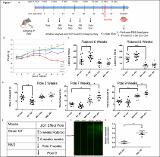
| dc.description.abstract | Transcriptional and epigenetic alterations occur early in Huntington's disease (HD), and treatment with epigenetic modulators is beneficial in several HD animal models. The drug JQ1, which inhibits histone acetyl-lysine reader bromodomains, has shown promise for multiple cancers and neurodegenerative disease. We tested whether JQ1 could improve behavioral phenotypes in the R6/2 mouse model of HD and modulate HD-associated changes in transcription and epigenomics. R6/2 and non-transgenic (NT) mice were treated with JQ1 daily from 5 to 11 weeks of age and behavioral phenotypes evaluated over this period. Following the trial, cortex and striatum were isolated and subjected to mRNA-seq and ChIP-seq for the histone marks H3K4me3 and H3K27ac. Initially, JQ1 enhanced motor performance in NT mice. In R6/2 mice, however, JQ1 had no effect on rotarod or grip strength but exacerbated weight loss and worsened performance on the pole test. JQ1-induced gene expression changes in NT mice were distinct from those in R6/2 and primarily involved protein translation and bioenergetics pathways. Dysregulation of HD-related pathways in striatum was exacerbated by JQ1 in R6/2 mice, but not in NTs, and JQ1 caused a corresponding increase in the formation of a mutant huntingtin protein-dependent high molecular weight species associated with pathogenesis. This study suggests that drugs predicted to be beneficial based on their mode of action and effects in wild-type or in other neurodegenerative disease models may have an altered impact in the HD context. These observations have important implications in the development of epigenetic modulators as therapies for HD. | en_US |
| dc.description.sponsorship | National Institutes of Health (Award NRSA-1F31NS090859-01 | en_US |
| dc.language.iso | en | |
| dc.publisher | Oxford University Press (OUP) | en_US |
| dc.relation.isversionof | http://dx.doi.org/10.1093/hmg/ddz264 | en_US |
| dc.rights | Creative Commons Attribution-Noncommercial-Share Alike | en_US |
| dc.rights.uri | http://creativecommons.org/licenses/by-nc-sa/4.0/ | en_US |
| dc.source | Prof. Fraenkel via Howard Silver | en_US |
| dc.title | Treatment with JQ1, a BET bromodomain inhibitor, is selectively detrimental to R6/2 Huntington’s disease mice | en_US |
| dc.type | Article | en_US |
| dc.identifier.citation | Kedaigle, Amanda J et al. "Treatment with JQ1, a BET bromodomain inhibitor, is selectively detrimental to R6/2 Huntington’s disease mice." Human Molecular Genetics 29, 2 (November 2019): 202–215 © 2019 The Author(s) | en_US |
| dc.contributor.department | Massachusetts Institute of Technology. Department of Biological Engineering | en_US |
| dc.relation.journal | Human Molecular Genetics | en_US |
| dc.eprint.version | Author's final manuscript | en_US |
| dc.type.uri | http://purl.org/eprint/type/JournalArticle | en_US |
| eprint.status | http://purl.org/eprint/status/PeerReviewed | en_US |
| dc.date.updated | 2020-06-22T14:00:47Z | |
| dspace.date.submission | 2020-06-22T14:00:53Z | |
| mit.journal.volume | 29 | en_US |
| mit.journal.issue | 2 | en_US |
| mit.license | OPEN_ACCESS_POLICY | |
| mit.metadata.status | Complete | |