| dc.contributor.author | Bertoni, Mariana I. | |
| dc.contributor.author | Hudelson, S. | |
| dc.contributor.author | Newman, Bonna Kay | |
| dc.contributor.author | Bernardis, S. | |
| dc.contributor.author | Fenning, David P. | |
| dc.contributor.author | Dekkers, H. F. W. | |
| dc.contributor.author | Cornagliotti, E. | |
| dc.contributor.author | Zuschlag, A. | |
| dc.contributor.author | Micard, G. | |
| dc.contributor.author | Hahn, G. | |
| dc.contributor.author | Coletti, G. | |
| dc.contributor.author | Lai, Barry | |
| dc.contributor.author | Buonassisi, Tonio | |
| dc.date.accessioned | 2013-04-04T19:01:27Z | |
| dc.date.available | 2013-04-04T19:01:27Z | |
| dc.date.issued | 2010-06 | |
| dc.identifier.isbn | 978-1-4244-5890-5 | |
| dc.identifier.issn | 0160-8371 | |
| dc.identifier.other | INSPEC Accession Number: 11625881 | |
| dc.identifier.uri | http://hdl.handle.net/1721.1/78294 | |
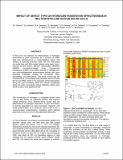
| dc.description.abstract | In this work we examine the effectiveness of hydrogen passivation at grain boundaries as a function of defect type and microstructure in multicrystalline silicon. We analyze a specially prepared solar cell with alternating mm-wide bare and SiNx-coated stripes using laser beam-induced current (LBIC), electron backscatter diffraction (EBSD), synchrotron-based X-ray fluorescence microscopy (μ-XRF), and defect etching to correlate pre- and post-hydrogenation recombination activity with grain boundary character, density of iron-silicide nanoprecipitates, and dislocations. This study reveals that the microstructure of boundaries that passivate well and those that do not differ mostly in the character of the dislocations along the grain boundary, while iron silicide precipitates along the grain boundaries (above detection limits) were found to play a less significant role. | en_US |
| dc.language.iso | en_US | |
| dc.publisher | Institute of Electrical and Electronics Engineers | en_US |
| dc.relation.isversionof | http://dx.doi.org/10.1109/PVSC.2010.5616904 | en_US |
| dc.rights | Article is made available in accordance with the publisher's policy and may be subject to US copyright law. Please refer to the publisher's site for terms of use. | en_US |
| dc.source | IEEE | en_US |
| dc.title | Impact of defect type on hydrogen passivation effectiveness in multicrystalline silicon solar cells | en_US |
| dc.type | Article | en_US |
| dc.identifier.citation | Bertoni, M.I. et al. “Impact of Defect Type on Hydrogen Passivation Effectiveness in Multicrystalline Silicon Solar Cells.” 2010 35th IEEE Photovoltaic Specialists Conference (PVSC), 20-25 June 2010, Hawaiian Convention Center, Honolulu, HI, USA, IEEE, 2010. 000345–000346. CrossRef. Web. ©2010 IEEE. | en_US |
| dc.contributor.department | Massachusetts Institute of Technology. Department of Mechanical Engineering | en_US |
| dc.contributor.mitauthor | Bertoni, Mariana I. | |
| dc.contributor.mitauthor | Hudelson, S. | |
| dc.contributor.mitauthor | Newman, Bonna Kay | |
| dc.contributor.mitauthor | Bernardis, S. | |
| dc.contributor.mitauthor | Fenning, David P. | |
| dc.contributor.mitauthor | Buonassisi, Tonio | |
| dc.relation.journal | Proceedings of the 2010 35th IEEE Photovoltaic Specialists Conference (PVSC) | en_US |
| dc.eprint.version | Final published version | en_US |
| dc.type.uri | http://purl.org/eprint/type/ConferencePaper | en_US |
| dspace.orderedauthors | Bertoni, M.I.; Hudelson, S.; Newman, B.K.; Bernardis, S.; Fenning, D.P.; Dekkers, H.F.W.; Cornagliotti, E.; Zuschlag, A.; Micard, G.; Hahn, G.; Coletti, G.; Lai, B.; Buonassisi, T. | en |
| dc.identifier.orcid | https://orcid.org/0000-0002-4609-9312 | |
| dc.identifier.orcid | https://orcid.org/0000-0001-8345-4937 | |
| dspace.mitauthor.error | true | |
| mit.license | PUBLISHER_POLICY | en_US |
| mit.metadata.status | Complete | |